
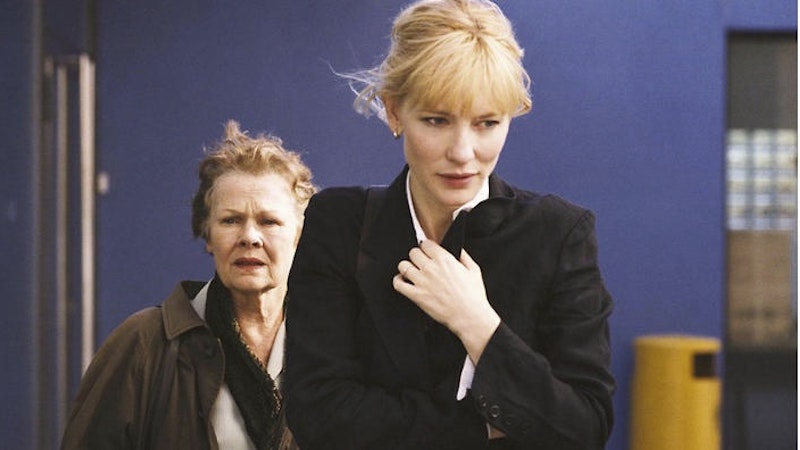
When you live on a scattered islet, you want to get back to the mainland. That’s the insight I had when reading Zoe Heller’s excellent novel What Was She Thinking? (retitled Notes on a Scandal because of the film adaptation, but I’m stubborn). There’s a scene where the very lonely narrator encounters another isolated person and recoils. She doesn’t want to be around someone like that; she wants people, real people. A person trapped on a tiny island isn’t hoping to wave at somebody else trapped on a second tiny island. Or, to adjust the metaphor, out on the ocean you want to see land and instead your tiny dinghy scrapes alongside somebody else’s tiny dinghy. The bump isn’t progress. Worse, looking at that other person you see the fix you’re in, you get an outside demonstration of what it can do. Finally, the odds of you two being a match seem thin. That’s how I feel about social life, in general: Meet a lot of people and your chances of finding somebody matchable go up. Meet very few and not much of a pool’s left. Plus, people who can’t be around others are (possibly by definition) difficult to be around.
Taking a lofty view, individuals want to be part of the whole. Knowing some individual people isn’t enough; the typical person feels better if they know more people besides, a crowd of them, and if they know that this crowd considers the person to be okay. I knew a leftist Charlie Kirk–type (amateur, not professional) who said, hey, when you see a movie and there’s an audience, everybody’s there, doesn’t the movie feel better? We want to be together, nothing wrong with that, humanity’s strength. But one person and another isn’t much of a we, not unless special conditions are present, and those conditions don’t include desperation.
So the other dope in a dinghy doesn’t interest us. We want to be part of the whole. Be polite to the dope, but avoid them. Their reasons for being stranded may not be as forgivable as yours. Maybe they have no neurological difficulties, just disagreeable traits resulting from bad parenting. Not much you can do about that if they won’t, so don’t get trapped. Knew one who was a leech.
My guess is that the more people you know, the easier you feel with them. The fewer people you know, the edgier and more resentful your dealings. Exceptions form a valley in which we find the few people of great character and depth of love. Further exceptions feature people so calculating that their squadrons of friends occasion nonstop playacting and careful dancing. But the rest of us ride the dynamic: more people, less of a screwy emotional and social life; fewer people, the opposite. Plus, it’s more interesting ashore. Everything I like in my life comes from there, and someday I’d love to visit.