
A few years ago, somewhere in Texas, or San Francisco, or Washington DC, in a massive office of chrome and glass, Elon Musk leaned back in his leather chair, surveyed the room, tented his fingers, and declared in that big booming voice of his, “Demolition Man was a documentary.” Can you believe it’s been three-and-a-half-years since that tweet? But my memory was off: he tweeted, “Demolition Man movie is becoming real.” This was a reply to a tweet that’s since been deleted. Demolition Man movie is becoming real, it sounds so good, but I didn’t know what it meant. I never saw Demolition Man. The era of the bodybuilder action star—covered by Nick De Semlyn in his book The Last Action Heroes—was coming to a close in the first years of my life, and by the time I could tell you what was on TV, Jean Claude Van Damme, Dolph Lundgren, and Steven Seagal were history. Arnold Schwarzenegger and Sylvester Stallone were the only ones who stuck around, although Stallone had his valleys, while Schwarzenegger’s only real “failure” remains The Last Boy Scout, which actually didn’t bomb—it was just below par for the unstoppable Austrian superstar.
Demolition Man, starring Stallone and released the same year as The Last Boy Scout, cost about the same and made about the same amount of money as Schwarzenegger’s “bust,” but was widely seen as a reasonable success after a dry spell in the multi-hyphenate’s action career. From the beginning, Stallone has operated as an artist first, while Schwarzenegger has been a businessman through and through; they’re both entrepreneurial, but Schwarzenegger would never think to make something like Paradise Alley or Rocky Balboa. He’s not needy and insecure like Stallone, who’s only as needy and insecure as any other artist not on top of the world at all times. Schwarzenegger’s mission has always been more straightforward: conquer America, conquer Hollywood, and run for the highest office possible. Stallone, starving artist auteur of Rocky, has had a bumpier, less-defined career by default because he works from artistic impulse and the kind of roundabout searching that comes naturally to all artists and frustrates more grounded people, whether they’re in business or not.
Stallone didn’t generate Demolition Man. When he signed on, it was just another action movie, hopefully a good one, but then Daniel Waters was brought in to rewrite the entire script and change it into an action comedy. These rarely work, but Waters, author of Heathers, was on a bizarre hot streak in the early-1990s writing and doctoring massive franchises and blockbusters like Batman Returns, is intelligent and wry enough to strike an unfortunately rare balance between social satire and genre functionality. Waters doesn’t look down on the genre, and in an interview with Bret Easton Ellis last year, he raved about working with producer Joel Silver and their obsession with five act structures. Waters’ best films work both as they are and as self-critiques; the best example of this is Heathers, the greatest teen movie of the 1980s and the greatest satire of the 1980s teen movie.
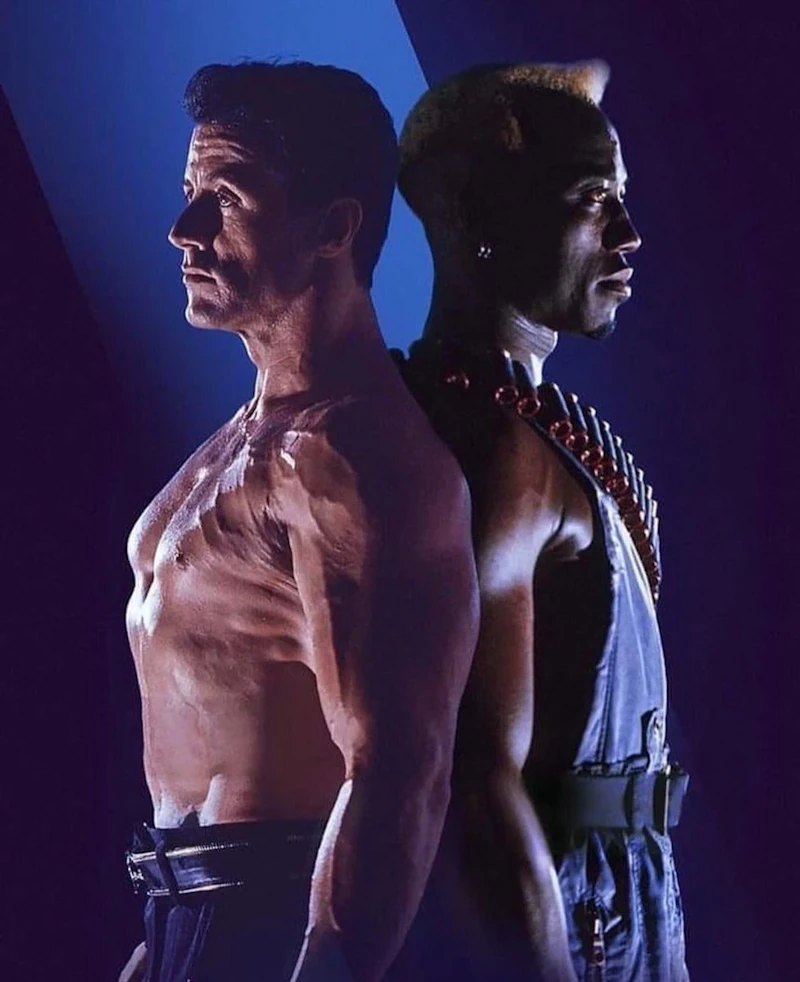
Demolition Man isn’t an autopsy of action movies, or a scabrous satire of the meathead genre or the political correctness of the late-1980s and early-1990s; Waters, unlike most of his Gen X peers, had no qualms working within the confines of a “star vehicle” like this. He stopped doing it after the mid-1990s—a restless and searching artist himself—but he never turned his nose up at the movies he wrote or the people he worked with. Demolition Man resembles its own politically-correct dystopia: not too heavy, not too nice, straight down the middle of a lane you’ve rarely traveled. Demolition Man isn’t an experimental or confrontational movie, but its “BE WELL” premise provides new jokes for every scene. We get it: Stallone and villain Wesley Snipes come from a time when people were much more violent, far cruder, and more free. Denis Leary stalks the sewers as a libertarian Che Guevara, while Nigel Hawthorne sits on a crooked thrown fit today for Anthony Fauci. These men were architects of Brave New World nightmare societies, and thankfully only Hawthorne’s character succeeded—at least for 22 years. Once Stallone is unfrozen after decades in cryogenesis, he takes one look at the nice, clean, efficient future and declares, “Back then we worked for a living. This fascist crap makes me want to puke.” That’s about as far as the stated politics go, but Demolition Man doesn’t let you forget that this supposedly “nice” world is a suffocating prison of fake charm and hospitality.
The best running joke in Demolition Man is the omnipresent ringing of the “Verbal Mandate” machines, issuing tickets every time someone swears. Once Stallone and Snipes are unleashed, these machines go off constantly, and they never stop throughout the movie—the sound just gets quieter each time, and towards the end, you can still see them spitting out tickets at a furious rate. Otherwise, it’s Stallone staring blankly at Sandra Bullock’s peculiar neutered futurisms, despite her “heavy research” into the 20th century. The right between the eyes pacing and construction of Demolition Man emphasize the social satire, just as the pleasures of Heather only highlighted its acid undercurrent.
Demolition Man isn’t a documentary—sorry, Demolition Man movie isn’t becoming real. But at least there’s one cautionary tale from the past about what the world went through in the first years of this decade.
—Follow Nicky Otis Smith on Twitter: @NARCFILM
