
History demarcates the career of Luis Buñuel into two distinct periods, the early surrealism and the late-European absurdist comedies, with a perfunctory glance offered to Los Olvidados, in the process neglecting the most productive section of his career, where he worked in the Mexican film industry following his exile from Spain and thwarted Hollywood sojourn. It’s an injustice—one likely to befall any great, productive director—developed equally out of decades of preconceived aversions to the Mexican industry of the classical period, understood in popular memory as an inferior Hollywood, and biographical regurgitations of the supposed irrelevance of those films to the general understanding of Buñuel that foreclose viewers from going out of their way to watch those films.
Several Buñuel films of this period are worthy of reconsideration, one of which is Susana, the melodrama that immediately succeeded Los Olvidados, made at the behest of actor Fernando Soler and producer Sergio Kogan (who saw in it an opportunity to push his wife Rosita Quintana into stardom, as had become a viable strategy by this point) by a penurious Buñuel beginning to settle within an industry after decades of hardship. Contrary to the expectations this insinuates, Susana exemplifies Buñuel’s subversive character, here not given the free reign of his later films, but working slyly, and more successfully, under the interrogatory eyes of an audience looking to be entertained above all.
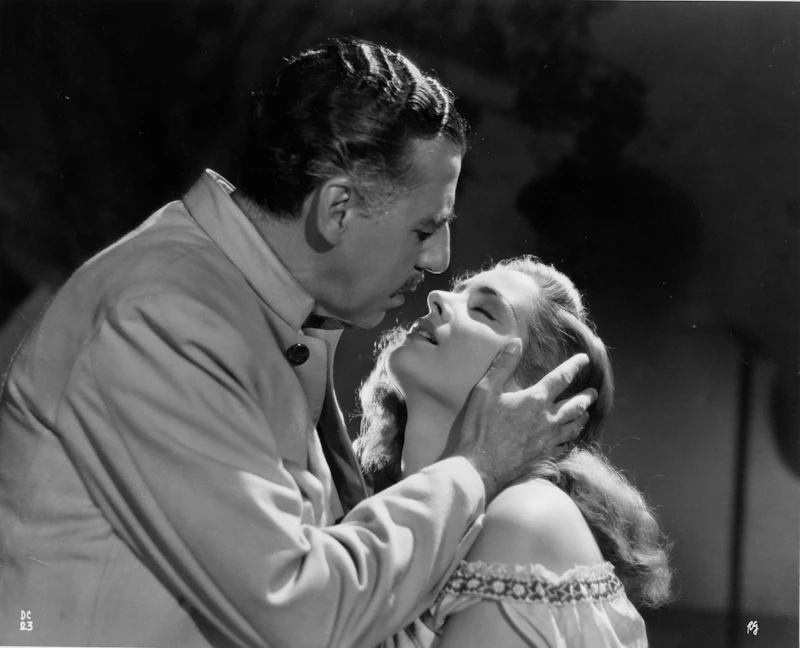
One stormy night, young Susana breaks out of a reformatory, where she’d been held for years, and reaches the idyllic ranch occupied by Don Guadalupe and his family, who, against the recalcitrance of mother and maid, take her in. Over the next days, Susana quickly seduces the three men of the ranch and ruptures the family cohesion, forcing the mother to step in. The narrative of the mysterious outsider invading an intimate setting is common to melodrama. Those films are typically open to virtue, the inviolate character, followed and ultimately imperiled by the intruder.
Buñuel, by this point still a work-for-hire, respects the superficiality of those rules while already distorting them. In Susana, he inverses the order, opening to the seductress, followed by the family, while maintaining the infiltration narrative, in the processing altering its meaning. This narrative then fulfills a dual function; there’s a surface and a shadow narrative, corresponding to sentimentality and emotion, a stand-off between domesticated affection and pure instinct that fulfill the requirements of the genre while transcending them in what Claude Guateur calls an exercise in antiphrasis, the deliberate interplay of appearance and reality.
The surface narrative concerns the world of appearances, the disruption of the good family by the evil seductress, hailing the family as virtuous, while the shadow narrative implicitly challenges the hypocrisy of the very family through the excess of repressed desires and primal instincts, culminating in the mother’s violent beating of Susana, in which the chastity and restraint commonly associated with the good mother is replaced by the violent rage of her subconscious.
It’s only at the point of irrevocable scandal that the artifice of sentimentality intervenes. Serendipitously, Susana’s arrested and brought back to the reformatory; the sun rises with the birds, as the ranch re-emanates its bucolic glimmer, ending the terrible nightmare. The ending’s unearned, unreal, and in some ways as if cut off from the prior scene, is precisely Buñuel’s point: it’s sentimentality decoupled from emotion, or rather, it’s the emulation of emotion that’s the object of continues ridicule.
The concept of the scandal plays a central role as the social order ‘s rupture and the consequential loss of public trust in its face and the convention it stands behind. It may, like melodrama itself, dissolve back into mere sensationalism if the forces behind the scandal are unable to transform it, which is precisely what occurs in Susana, where the family against their better judgment, and the evident truth of the situation, decide to save the face of the crumbling conventions. What we’re left with is a historical document, the desperation for preservation of a social force close to, but not yet at its point of dissolution. These people can’t yet foresee a world without family, even as its ground is eroding underneath them.
Susana presents the critique of kitsch that doesn’t intellectualize itself, but is grounded in the primal components of melodrama, which Buñuel remained close to, extoling it as an essential mode of expression, soiled by its tendency to deteriorate into sentimentality at the hand of mass production, where its power serves conservative tendencies, as it did during this period of Mexican cinema. Susana acts as an indictment on those films, and though it wasn’t a success, it provided the first step toward a more transgressive melodrama in Mexico, opening up the possibility of critiquing the family apparatus, an avalanche that would culminate with films like Ismael Rodriguez‘ Dos tipos de cuidado decisively turning the ranchera tropes into untenable farce.
The same family that couldn’t imagine its death must die a sudden one. As an artifact of Mexican cinema, Susana is of great importance, but its significance can’t be reduced to history. Formally, it initiates Buñuel’s transition toward the long-take, its swoops and ellipses again fulfilling a clever dual function, satisficing efficiency requirements, while serving a thematic point, preaching against the archetype that would become his life-long enemy, the incontinent macho ideal, who crumbles at the sight of desire.